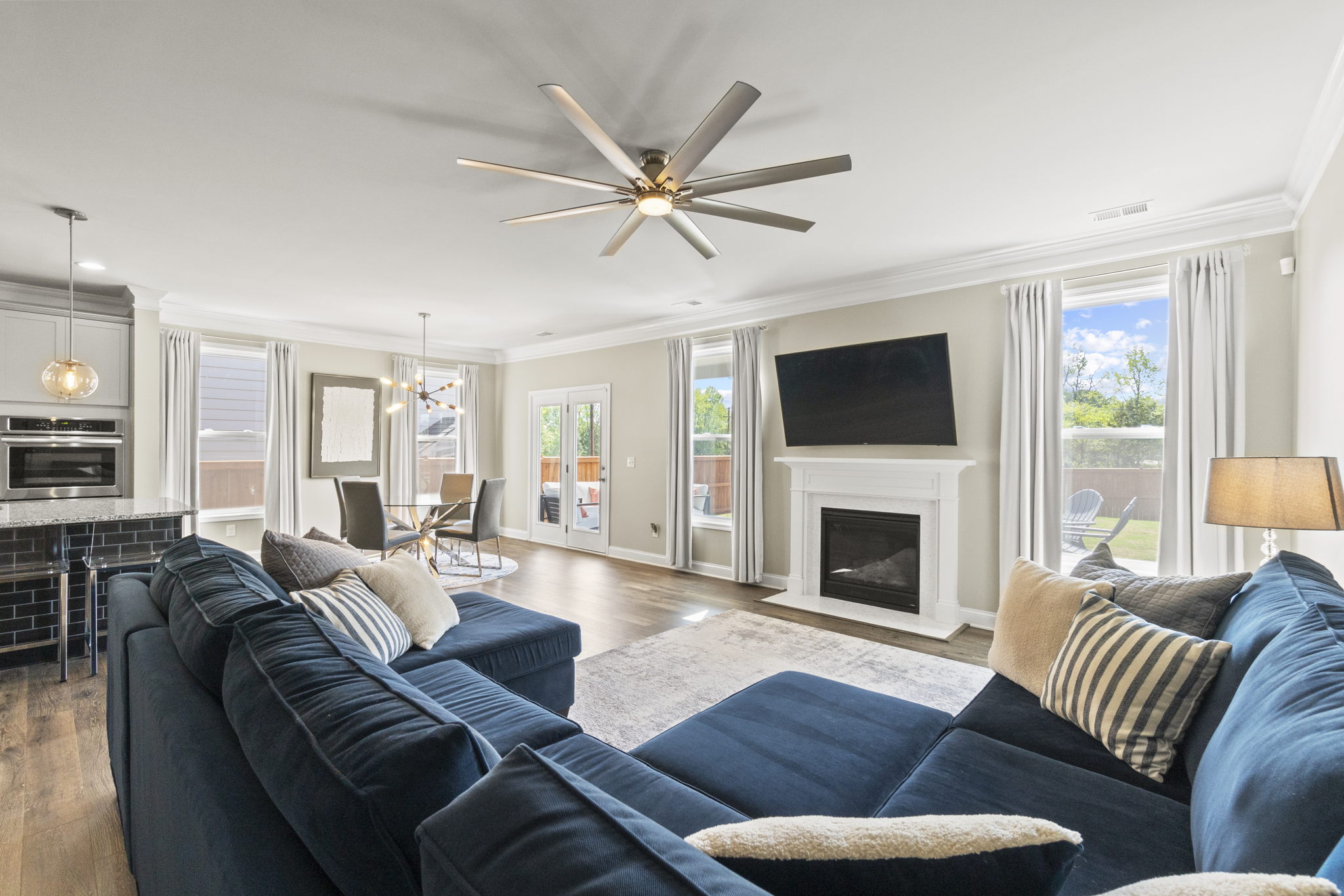
Is professional home staging worth it when selling a house in Kankakee County?
For most Kankakee sellers, staging is worth something — but not always worth everything. The right level of staging depends on your home’s condition, whether it’s occupied or vacant, and how it stacks up against competing listings. A targeted approach — even a strong DIY effort — can move the needle on both sale price and days on market without requiring a full professional furnishing package.
What the Data Says About Staging and Sale Outcomes
The numbers from NAR’s 2023 Profile of Home Staging are worth knowing before you decide. According to that report, 20% of sellers’ agents said staging increased the dollar value offered by 1% to 5% compared to similar non-staged homes, and 14% said it increased value by more than 5%. That’s a meaningful potential lift — but it’s a national average, not a Kankakee guarantee.
On timeline, the same report found that 27% of sellers’ agents said staging greatly decreased time on market, with another 24% saying it slightly decreased it. More than half of agents surveyed saw some positive effect on speed.
Buyer psychology is a big part of why staging works. NAR’s staging data shows that 81% of buyers’ agents said staging made it easier for buyers to visualize a property as their future home, and 58% said staging affected most buyers’ view of a home. Another 31% said it made buyers more willing to walk through homes they’d seen online first.
That last point matters in Kankakee more than people realize. A significant share of buyers here — including Chicago-area relocators and out-of-area investors — are browsing listings online before they ever set foot in the county. If your photos don’t stop the scroll, you’re losing showings before you’ve had a chance to compete.
What this means at Kankakee County price points
Here’s where I have an honest conversation with every seller who asks me about staging: the math is different here than it is in the Chicago suburbs.
Portal data from Zillow’s Kankakee home values dashboard shows typical home values trending in the low- to mid-$100,000s as of mid-2026 — though that’s model-based data, not an official MLS figure. At those price points, your upfront staging budget is a larger percentage of your equity than it would be for a seller in a $400,000+ market. You have to spend more carefully.
For broader context, NAR’s Q1 2026 metro price report shows home prices increased in 71% of U.S. metro areas, with a national median of $404,300. The Midwest — including Illinois — has been one of the steadier regions, with mid-2026 national coverage citing NAR data showing Midwest prices up roughly 3.6% year-over-year. That’s a reasonably healthy backdrop for sellers — but it also means a well-priced, well-presented home can do the job without an expensive staging package.
According to Redfin’s Illinois market summary for summer 2026, median days on market in Illinois is running in the 30–40 day range, with a sale-to-list ratio near 100% — meaning many homes are selling close to asking price. That’s a competitive environment where presentation still matters, but where correct pricing is doing a lot of the heavy lifting.
Professional Staging vs. DIY: Which Makes Sense for Your Home?
Not every Kankakee county home needs the same level of staging. Here’s how I frame it with my clients.
When professional staging is most likely to pay off
- Vacant homes — Empty rooms photograph poorly and feel smaller in person. Furniture rental gives buyers a sense of scale and livability that empty space can’t.
- Dated interiors competing in a crowded price band — If three similar homes are listed within a few blocks of yours, staging can be the visual differentiator that gets yours shown first.
- Investor flips targeting Chicago-area buyers — Out-of-area buyers often have higher visual expectations and are making decisions partly from photos.
- Homes with awkward layouts — A professional stager can use furniture placement to tell the story of how a space functions.
The Real Estate Staging Association describes the typical professional fee structure as an initial consultation fee, followed by separate charges for physically rearranging your existing furniture and décor, plus furnishing and monthly rental fees if the stager is bringing in pieces. These fees are not regulated — they’re fully negotiable between you and the stager. For a Kankakee seller, a consultation-only or occupied staging approach (where the stager works with what you have) is often the most cost-effective starting point.
When DIY staging is enough
According to NAR’s staging survey, 23% of sellers’ agents personally helped stage the home, and the majority of staging guidance focused on decluttering and cleaning rather than full furniture rental. That lines up with what I see in Kankakee county.
For an occupied home in decent condition, a strong DIY effort can capture most of the benefit:
- Declutter and depersonalize — Remove excess furniture, personal photos, and collections. Buyers need to picture themselves there, not you.
- Deep clean everything — Floors, baseboards, windows, appliances. Clean reads as cared-for.
- Neutral paint — Cover bright or dark accent walls. A fresh coat of warm white or greige is one of the highest-ROI prep moves at any price point.
- Minor repairs — Loose hardware, dripping faucets, chipped caulk, burned-out bulbs. These small things signal deferred maintenance to buyers.
- Curb appeal basics — Mowed lawn, trimmed shrubs, fresh mulch, clean front door. The first photo is usually the exterior.
The Real Estate Staging Association notes that DIY staging focuses on exactly these moves — decluttering, cleaning, and rearranging existing furniture — while professional staging adds design expertise, rental furnishings, and targeted styling for photography. For many Kankakee homes, the DIY list above, done well, gets you 80% of the way there.
Prioritize these rooms first
If your budget or energy is limited, NAR’s staging data is clear on where to focus: buyers’ agents rank the living room as the most important room to stage, followed by the primary bedroom and kitchen. Those three rooms drive the most buyer decisions — both online and in person. Stage those well and let the rest be clean and tidy.
| Room | NAR Priority Rank | Why It Matters | DIY or Pro? |
|---|---|---|---|
| Living Room | #1 | First impression; anchor of online photos | DIY often sufficient if decluttered and styled |
| Primary Bedroom | #2 | Emotional purchase driver; buyers spend time here | DIY with neutral bedding; pro for vacant |
| Kitchen | #3 | High scrutiny; cleanliness and counter space matter | DIY (clear counters, fresh hardware if needed) |
| Dining Room | Secondary | Defines flow; especially important in open plans | Pro if vacant; DIY if occupied |
| Bathrooms | Supporting | Cleanliness is non-negotiable; staging is minimal | DIY (clean, fresh towels, no personal items) |
How Staging Fits Into Your Overall Selling Strategy
Staging is one lever — not the only one. In my experience working with sellers across Kankakee, Bourbonnais, Bradley, and Manteno, I’ve watched a beautifully staged home sit because it was overpriced, and I’ve watched a modestly prepped home go under contract in days because the price was right. The two have to work together.
What staging does is reduce friction. A well-presented home generates more showings, invites fewer low-ball offers (because it reads as move-in ready), and gives buyers less to negotiate against. According to Realtor.com’s June 2026 housing trends report, Midwest list prices have been holding steady year-over-year — which means you’re not in a market where buyers are desperate enough to overlook a dated presentation. You still have to compete.
One thing I tell every seller before we list: knowing your real equity position is the first step. Staging costs — whether that’s a professional package or a weekend of DIY prep — come out of your pocket before closing. They don’t show up as a line item on your settlement statement. The title company handles statutory items like Illinois’s real estate transfer tax under 35 ILCS 200/31-10 (set at $0.50 per $500 of value, with $0.10 allocated to the county and $0.40 to the state treasury per the Illinois Compiled Statutes), recording fees, and title insurance — but your staging investment is a separate, pre-listing decision. If you want to see how all of those pieces fit together, my post on the cost to sell a house in Kankakee County walks through the full picture.
I also keep an eye on what’s actually moving in each price band right now — including homes that never hit the public sites. If you’re wondering whether your specific home needs staging to compete, that’s exactly the kind of question I can answer with a real market analysis, not a guess.
Your specific answer depends on your home’s condition, how it compares to active competition, your timeline, and your budget. That’s where a conversation with someone who knows this market makes the difference between spending money strategically and spending it unnecessarily.
Frequently Asked Questions
Is paying for professional home staging really worth it for a Kankakee county house in the $100k–$200k range?
It depends on your home’s condition and competition. At Kankakee county price points, a full professional staging package (with furniture rental) is most justified for vacant or significantly dated homes. For occupied homes in reasonable condition, a professional consultation combined with strong DIY prep often captures most of the benefit at a fraction of the cost. There’s no guaranteed return — NAR’s staging data shows national averages, not Kankakee-specific outcomes.
Which rooms should I prioritize for staging in my Kankakee county home if I’m on a tight budget?
Focus your energy on the living room, primary bedroom, and kitchen — those are the three rooms buyers’ agents rank as most important to stage. These rooms anchor your listing photos and drive the most buyer decisions. Make sure they’re decluttered, clean, and neutrally styled before anything else gets attention.
Can I just declutter and do DIY staging instead of hiring a professional stager in Kankakee county?
For most occupied Kankakee homes in decent condition, yes — strong DIY staging (decluttering, deep cleaning, neutral paint, minor repairs, and curb appeal) can deliver most of the benefit. The Real Estate Staging Association notes that DIY staging focuses on exactly these fundamentals. Where professional staging adds clear value is in vacant homes or spaces that need design expertise to photograph well.
Does staging help Kankakee county homes sell faster, or are price and location more important for days on market?
Price and condition are the primary drivers — staging is a supporting factor, not a substitute for correct pricing. That said, NAR’s staging survey found that 51% of sellers’ agents saw staging decrease time on market. In Illinois’s current market, where Redfin’s summer 2026 data shows median days on market in the 30–40 day range, a well-presented home at the right price can move quickly — but overpricing negates any staging benefit.
Do buyers in smaller Illinois markets like Kankakee county care as much about staging as buyers in Chicago do?
They care about it differently. Chicago buyers may expect full professional staging as a baseline; Kankakee buyers are often more practical. But both groups start their search online, and NAR data shows 31% of buyers’ agents say staging makes buyers more willing to walk through homes they saw online. In a market where out-of-area buyers and investors are part of your pool, strong photos — which staging enables — matter more than many local sellers expect.
The bottom line: staging works best as part of a complete strategy — right price, right prep, right marketing. If you’re not sure what level of staging your home actually needs to compete in today’s Kankakee market, let’s talk through it. I’ll give you an honest read on what will move the needle and what’s optional for your specific situation.
Ready to find out what your home needs before you list? Contact Dawn Olson at McColly Real Estate for a no-pressure market analysis and pre-listing strategy conversation.
Equal Housing Opportunity. Dawn Olson is a Licensed Real Estate Broker regulated by the Illinois Department of Financial and Professional Regulation. This article is general information only — not legal, tax, or financial advice. Confirm your specific costs, tax obligations, and transaction details with your attorney, tax advisor, lender, or closing officer.
Leave a Reply