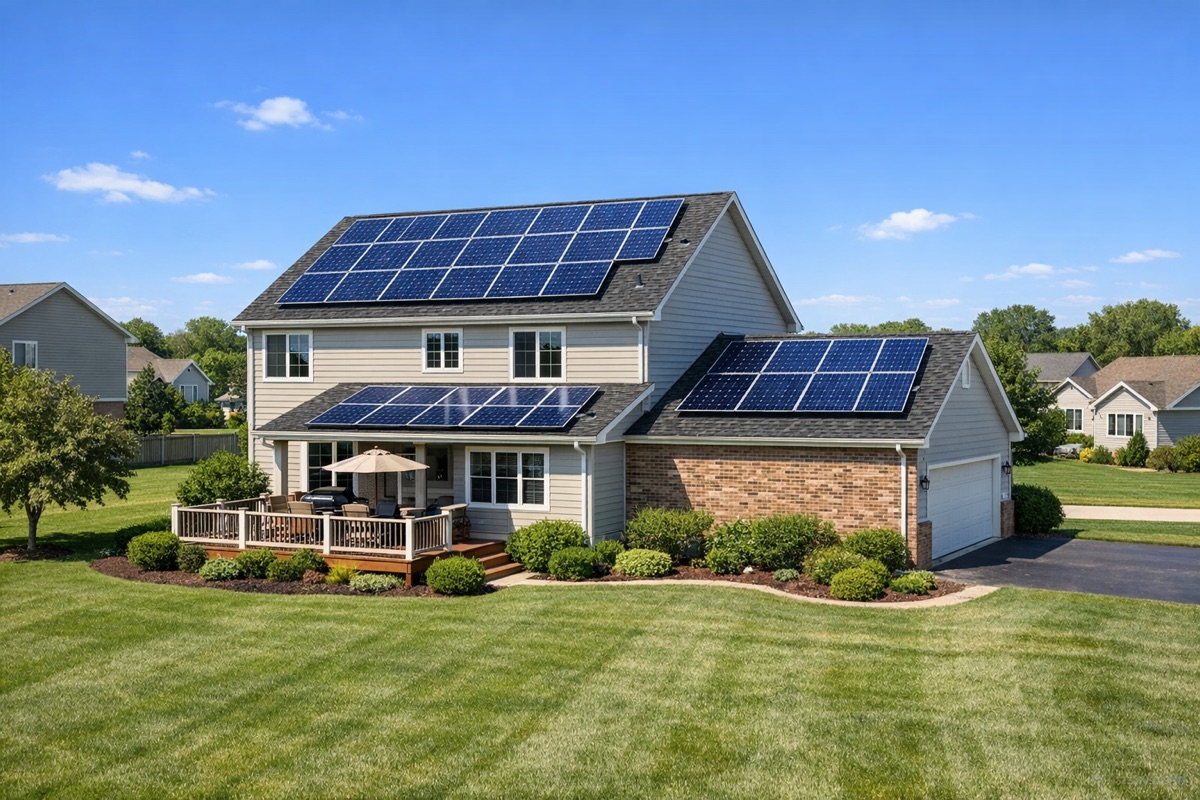
Solar panels can add value to a Kankakee County home, but the impact depends heavily on whether your system is owned, financed, or leased. Owned systems are easiest to transfer at sale. Leased systems require buyer approval and title review. Get the paperwork organized before you list.
Should you install solar panels on your Kankakee County home?
Solar panels can be a smart investment for Kankakee County homeowners, but the financial payoff and resale impact depend on how the system is structured. Owned systems are the cleanest to sell with, while leased systems add a layer of complexity at closing that can slow things down. Before you sign anything with a solar company, it’s worth understanding how the decision plays out when it’s time to sell.
The Basics: What Solar Actually Means for Your Home
Solar energy systems have gotten a lot more affordable over the past decade, and Illinois homeowners have real financial incentives available. The federal Residential Clean Energy Credit (also called the federal solar tax credit) allows qualifying homeowners to claim a percentage of installation costs on their federal income taxes. Confirm your specific eligibility with a tax professional, since the credit amount and phase-down schedule can affect your actual savings.
Beyond the tax credit, the core pitch from solar installers is that you’ll offset your monthly electricity bill. The U.S. Energy Information Administration tracks residential electricity rates, and Illinois rates have climbed steadily, which does make solar math more favorable than it was five years ago. Whether the numbers work for your specific home depends on your current usage, your roof’s orientation, and the size of the system you install.
But here’s the thing I want every homeowner in Bourbonnais, Bradley, or Manteno to understand before signing a solar contract: the financial case for solar and the real estate case for solar are two different conversations. They overlap, but they’re not the same.
Owned vs. Financed vs. Leased: Why the Structure Matters
The single biggest factor in how solar affects your home sale is whether you own the system outright, financed it, or signed a lease.
Owned outright: You paid cash for the installation. The system is yours, it conveys with the home, and buyers can factor it into their offer without any additional paperwork complications. This is the cleanest scenario at closing.
Financed (solar loan): You took out a loan tied to the system. Depending on how that loan was structured, there may be a UCC filing or lien recorded against the property. Your title company will need to review it, and you’ll likely need a payoff statement or lien release before closing. This is manageable, but it requires advance preparation.
Leased system or Power Purchase Agreement (PPA): You don’t own the panels. A third-party company owns them and charges you a monthly payment (or a per-kilowatt-hour rate) in exchange for using the electricity. When you sell, the buyer either has to assume the lease or you have to buy out the contract. The CFPB has published guidance on solar financing options that’s worth reading before you commit to any structure. Lease assumptions require buyer approval, and not every buyer wants to take on a 20-year payment obligation. This is the scenario I see cause the most friction in real estate transactions.
How Solar Affects Your Kankakee County Home Sale
Recent Zillow market data shows the median sale price in the Kankakee area is $189,900, with homes averaging 58 days on market. That’s a market where buyers are thoughtful, not panicked. Anything that adds complexity to a transaction, including an unresolved solar lease, can extend your timeline or reduce your negotiating position.
| Solar Ownership Structure | Impact at Closing | Buyer Perception |
|---|---|---|
| Owned outright (cash purchase) | Conveys with home, no lien review needed | Generally positive |
| Financed (solar loan / UCC filing) | Payoff statement or lien release required before closing | Neutral to positive if handled early |
| Leased / PPA | Buyer must assume lease or seller buys out contract | Mixed; can deter some buyers |
The Disclosure Question
Illinois law requires sellers to complete the Illinois Residential Real Property Disclosure Report under the Illinois Residential Real Property Disclosure Act. This form asks about known material defects and conditions affecting the property. If your solar system has a lease encumbrance, a recorded UCC filing, or any associated roof work that was done during installation, you’ll want to discuss with your attorney or title company how to address those items on the disclosure form. The form is a legal document, not a formality.
Illinois also requires a separate Radon Disclosure under the Illinois Radon Awareness Act. This comes up in nearly every residential sale in Kankakee County, so if you’re doing a broader home efficiency upgrade that includes solar, it’s a good time to make sure your radon testing history is documented as well.
If your home was built before 1978, federal lead-based paint disclosure rules under U.S. EPA and HUD regulations also apply, separate from and in addition to the state solar-related disclosures.
What the Title Company Will Ask
In a Kankakee County closing, the title company handles the title search and the deed recording workflow. If your home has solar panels, expect the title company to ask early whether the system is owned, financed, or leased, and whether any recorded interest exists. That means a UCC search, a review of any solar contract, and potentially a payoff letter or UCC termination before the deed can record cleanly.
The practical takeaway: gather your solar paperwork before you list, not after you’re under contract. An unresolved solar lien discovered during title review is one of the more avoidable delays I see in transactions. It doesn’t kill deals, but it adds stress and time when you’re already on a clock.
Illinois also uses transfer stamps in the closing process. Any transfer-tax or stamp obligation should be confirmed with the Kankakee County Recorder of Deeds or your title company before closing, since solar-related encumbrances can affect the title work even if they don’t directly change the tax calculation.
Will Solar Actually Raise Your Appraised Value?
This is the question every homeowner asks, and the honest answer is: it depends. Research from the U.S. Department of Energy has shown that owned solar systems can add to a home’s appraised value in some markets. The National Association of Realtors’ sustainability research has also found that a meaningful share of buyers consider energy efficiency features important in their home search.
But appraisers work from comparable sales, and if the comparable homes in your neighborhood don’t have solar, the appraiser has limited data to assign a specific dollar value to your system. In a market like Kankakee County, where the median price is $189,900 and inventory is relatively modest (64 active listings as of August 2026), the value impact of solar is real but not automatic. The county median can also be misleading, since Bourbonnais and Manteno often run above it while other parts of the county run below. Your specific home’s situation is what matters, and that’s a conversation worth having with a local agent before you invest.
Every situation is different, and the only way to know how solar fits your specific home’s resale picture is to run through the details with someone who knows this market. That’s exactly the kind of conversation I walk my clients through before they make a decision this size.
If you’ve found this helpful, I’d love for you to read what other buyers and sellers in Kankakee County have said about working with me. You can find my reviews on Google.
Frequently Asked Questions
Do solar panels increase home value in Kankakee County?
Owned solar systems have the best chance of contributing positively to appraised value, but the impact is not guaranteed and depends on system condition, ownership structure, and whether comparable solar homes exist nearby. Leased systems are harder to value because buyers must assume the lease obligation, which can reduce their willingness to pay a premium. Talk to a local agent before assuming your installation will translate directly to a higher sale price.
Are solar panels worth it in northern Illinois weather?
Northern Illinois, including Kankakee County, gets less peak sunlight than southern states, which affects how much electricity your system generates. That said, solar resource data from the National Renewable Energy Laboratory shows that Illinois still has enough solar potential to make residential systems viable, especially with available federal tax credits. Your installer should provide a production estimate based on your roof’s orientation and local irradiance data, not a national average.
What happens to a solar lease when I sell my house in Kankakee County?
When you sell a home with a leased solar system, the buyer typically must either qualify to assume the lease or you must buy out the remaining contract. Lease assumptions require the solar company’s approval and the buyer’s agreement, which adds a step to the transaction. I always recommend sellers with leased systems contact their solar company early in the listing process to understand the buyout cost and assumption process before going under contract.
Does the title company need solar paperwork before closing?
Yes. In a Kankakee County closing, the title company will review whether any UCC filing, lien, or lease encumbrance is tied to the solar equipment. You’ll want to have your solar contract, any loan payoff information, and UCC termination documents (if applicable) ready before the title search is complete. Waiting until you’re already under contract to locate this paperwork is one of the most common avoidable delays in solar-related transactions.
Can I get a tax credit for solar panels if I live in Kankakee County?
Kankakee County homeowners who install a qualifying solar energy system may be eligible for the federal Residential Clean Energy Credit. The credit applies to the cost of the system and installation, subject to IRS eligibility rules. The IRS publishes current guidance on the Residential Clean Energy Credit on its website. Confirm your specific eligibility with a tax professional, since income, ownership structure, and other factors affect the outcome.
Will solar panels affect my appraisal when I refinance or sell?
They can, but the effect varies. Appraisers use comparable sales data, and if similar solar homes haven’t sold recently in your area, the appraiser may assign limited additional value. Owned systems in good condition are more likely to receive recognition than leased systems. If you’re planning to refinance after installation, discuss the appraisal approach with your lender in advance so there are no surprises.
The bottom line: solar can be a sound investment for Kankakee County homeowners, but the real estate side of the equation deserves as much attention as the energy savings side. Knowing your ownership structure, getting your paperwork in order, and understanding how buyers in your specific town will respond to the system are all things worth working through before you commit.
If you’re thinking about selling a home with solar panels, or you’re a buyer evaluating a home that has them, I’m happy to walk through the specifics with you. Reach out to schedule a conversation and we’ll figure out what makes sense for your situation.
Equal Housing Opportunity. Dawn Olson is a Licensed Real Estate Broker regulated by the Illinois Department of Financial and Professional Regulation. This article is general information only and is not legal, tax, or financial advice. Readers should confirm their own numbers and circumstances with their attorney, tax advisor, lender, or escrow/closing officer.
Leave a Reply