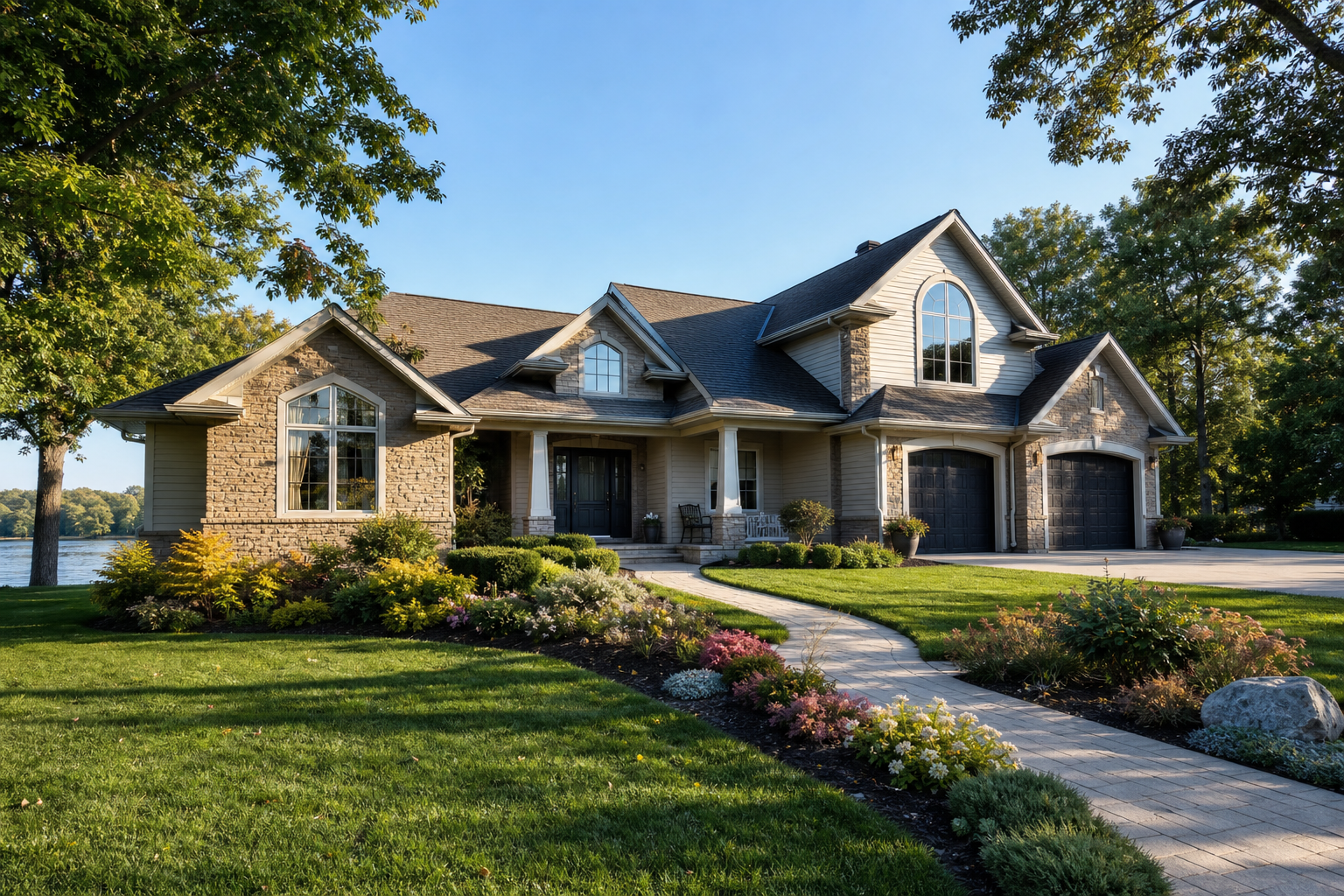
Buying a waterfront home on the Kankakee River means weighing lifestyle perks against practical considerations like flood insurance, lot access, and seasonal maintenance. The Kankakee market currently shows a median sale price around $189,900, though riverside properties often command a premium above that baseline.
What should I know before buying a waterfront home in Kankakee?
Buying a waterfront home on the Kankakee River means balancing real lifestyle rewards against a specific set of due-diligence steps that don’t apply to a standard in-town purchase. Flood zone status, shoreline access, insurance costs, and the condition of any dock or seawall all factor into the true value of a riverside property. Getting those details right before you make an offer is what separates a great waterfront purchase from an expensive surprise.
The Kankakee River and What It Offers Homeowners
The Kankakee River runs through one of northeastern Illinois’ most scenic corridors, and properties along its banks attract a specific kind of buyer: someone who wants the quiet of the water without leaving the conveniences of a real town behind. That’s a combination that’s genuinely hard to find at this price point in the region.
In my experience working with buyers across Kankakee County, waterfront properties generate some of the strongest emotional responses of anything I show. People walk onto a back deck overlooking the river and the decision-making process shifts. That’s not a bad thing, but it does mean you need your practical questions answered before you fall in love with the view.
What the lifestyle actually looks like
Riverside living in this area typically means direct or near-direct water access for kayaking, fishing, and boating. The Kankakee River is known regionally for its smallmouth bass fishery, and properties with private dock access or riparian rights to the shoreline carry real recreational value. You’re also looking at natural privacy buffers, mature trees, and the kind of backyard that doesn’t exist in a subdivision.
That said, waterfront is not a single category. Some homes sit on elevated banks with beautiful views but limited water access. Others have low-lying lots that put them closer to the action but also closer to the floodplain. The difference matters enormously for insurance, maintenance, and long-term value, so I always look at the specific parcel, not just the listing photos.
Where to look in Kankakee County
Riverside properties are spread across several communities in the county. The city of Kankakee itself has neighborhoods that back up to the river, and you’ll also find waterfront and water-access homes in Momence to the east, which sits at a particularly scenic bend of the river. Bourbonnais and Bradley buyers sometimes look at properties just outside the denser suburban core for this reason. Each of these sub-markets has its own pricing rhythm, and the county median can be misleading when you’re shopping a niche like waterfront. I always look at your specific town and street, not a countywide average.
Market Context and What Waterfront Homes Cost Here
According to recent Zillow market data, the Kankakee area median sale price sits at $189,900, with homes spending a median of 58 days on market. There are currently 64 active listings across the area, with 22 new listings added in the past 30 days and 87 homes sold in roughly the past 90 days.
Waterfront and water-access homes typically price above that median, depending on the lot, the condition of any water features (dock, seawall, riprap), and how much usable shoreline comes with the property. A home on an elevated bank with a river view is priced differently than one with a private dock and direct launch access. Your specific number depends on those details, and that’s where a local market analysis matters.
| Market Indicator | Kankakee Area (Recent) |
|---|---|
| Median Sale Price | $189,900 |
| Median Days on Market | 58 days |
| Active Listings | 64 |
| New Listings (last 30 days) | 22 |
| Homes Sold (last ~90 days) | 87 |
Source: Recent Zillow market data, Kankakee area, as of August 2026. Area-level figures; individual home values vary by condition, location, and timing.
One thing worth knowing: not all waterfront listings make it to the major public portals. I keep an eye on off-market and pre-market properties in this county, so if you’re specifically hunting for a riverside home, it’s worth asking me directly before assuming you’ve seen everything available.
What to Verify Before You Make an Offer
Waterfront purchases have a longer due-diligence checklist than a standard home purchase. Here’s what I walk every riverside buyer through before we get to an offer.
Flood zone and insurance
This is the first thing to check. Properties in or near the Kankakee River floodplain may fall within a FEMA-designated Special Flood Hazard Area, which means your lender will require flood insurance as a condition of financing. Flood insurance is a separate policy from your standard homeowner’s coverage and is priced based on the property’s elevation relative to the base flood elevation. The National Flood Insurance Program (NFIP) is the most common source, though private flood insurance options have expanded in recent years. Before you fall in love with a property, know which flood zone it’s in. Your lender and insurance agent can run those numbers once you have an address.
Illinois Real Property Disclosure
Under the Illinois Residential Real Property Disclosure Act, sellers are required to disclose known material defects and conditions affecting the property. For a waterfront home, pay close attention to what’s disclosed about water intrusion, basement flooding history, shoreline erosion, and the condition of any dock or water-access structure. Disclosure is what the seller knows and chooses to share. Your home inspection fills in the rest.
Home inspection for waterfront-specific issues
A standard home inspection is necessary, but for a riverside property you want an inspector who specifically looks at:
- Foundation and crawl space moisture from seasonal water-table fluctuation
- Dock, pier, or seawall condition if the property includes one
- Grading and drainage on the lot, especially on low-lying parcels
- Sump pump systems and any history of water in the lower levels
- Septic systems, if the property is not on municipal sewer (common in more rural stretches of the county)
The American Society of Home Inspectors maintains a directory of certified inspectors if you need a starting point, though I can also refer you to inspectors I’ve seen do thorough work on properties like these.
Riparian rights and shoreline access
Riparian rights govern what a property owner can do with the water and shoreline adjacent to their land. In Illinois, these rights are tied to ownership of the adjoining land, but the specifics of what you can build, modify, or access on or near the riverbank can involve state and local permitting. The Illinois Environmental Protection Agency and the Illinois Department of Natural Resources both have jurisdiction over certain shoreline activities. If adding or improving a dock is part of your plan, verify permitting requirements before you buy. This isn’t something to sort out after closing.
Title and survey
For waterfront properties, a current survey is more than a formality. You want to know exactly where the property line ends and the riverbank begins, whether any easements affect the shoreline, and whether the legal description matches what you’re physically looking at. The CFPB’s closing resource is a good primer on what title insurance covers and why it matters, especially when boundary questions exist.
Radon
Illinois is a high-radon state. The Illinois EPA recommends testing all homes for radon, and waterfront homes with lower-level spaces that sit closer to the water table are no exception. A radon test during your inspection period is inexpensive and worth doing.
Every waterfront situation is different, and the only way to know what you’re actually buying is to run through these items with someone who knows this market. That’s exactly the kind of guidance I provide before my buyers ever submit an offer.
If you’ve been searching online, keep in mind that real-time MLS data is more accurate than what shows up on the major listing aggregators, which can lag by days or show properties already under contract. When you’re ready to get serious about a riverside property, working from current MLS data is how you avoid wasting time on homes that aren’t actually available.
Ready to see what’s on the market? Reach out to me directly and I’ll pull current listings, including anything that hasn’t hit the public sites yet.
See what other buyers and sellers in Kankakee County have to say: read my Google reviews.
Frequently Asked Questions
Do waterfront homes in Kankakee require flood insurance?
It depends on the property’s location relative to FEMA’s designated flood zones. Homes within a Special Flood Hazard Area will require flood insurance as a lender condition if you’re financing the purchase. Even properties just outside the mapped floodplain can benefit from coverage, given how river levels can shift. Check the flood zone designation on any specific address before making an offer.
Are there waterfront homes available in Kankakee County under $200,000?
The Kankakee area median sale price is currently around $189,900 based on recent market data, so entry-level waterfront properties do exist in this range, though competition for them can be real. Condition, lot type, and water access all affect where a specific home prices relative to that median. The best way to know what’s available in your budget is to get current MLS data rather than relying on portal listings, which can be outdated.
What is the home-buying process like for a riverside property in Illinois?
The process follows the standard Illinois purchase contract framework, but with additional due-diligence layers: flood zone verification, a disclosure review that covers water-related history, a thorough home inspection with attention to moisture and shoreline structures, and a title search that confirms boundary and easement details. Illinois also requires a Residential Real Property Disclosure from the seller. Working with an agent who knows waterfront-specific issues in this county keeps you from missing something that matters.
How long do homes typically sit on the market in Kankakee?
Based on recent Zillow market data, the median days on market in the Kankakee area is currently 58 days. Waterfront and water-access properties are a smaller inventory niche, so well-priced riverside homes can move faster when they hit the market. Staying on top of new listings as they come in, rather than checking portals periodically, gives you the best shot at the right property.
What ongoing costs should I expect with a waterfront home?
Beyond the standard homeownership costs, riverside properties typically add flood insurance premiums, higher homeowner’s insurance (in some cases), and maintenance for any shoreline structures like docks, piers, or riprap. Seasonal upkeep of the lot and any water-access features is real. The specific costs depend on the property’s flood zone, the condition of existing structures, and your insurance options. I walk buyers through the full picture before we get to an offer so there are no surprises at closing or after.
Buying a waterfront home in Kankakee County is a genuinely rewarding move when you go in with the right information. The river lifestyle is real, the price point is accessible compared to most waterfront markets in the region, and I know this inventory well. Contact me today and let’s find the right riverside property for you.
Equal Housing Opportunity. Dawn Olson is a Licensed Real Estate Broker regulated by the Illinois Department of Financial and Professional Regulation. This article is general information only and is not legal, tax, or financial advice. Confirm your specific costs, insurance requirements, and transaction details with your attorney, tax advisor, lender, or closing officer.
Leave a Reply